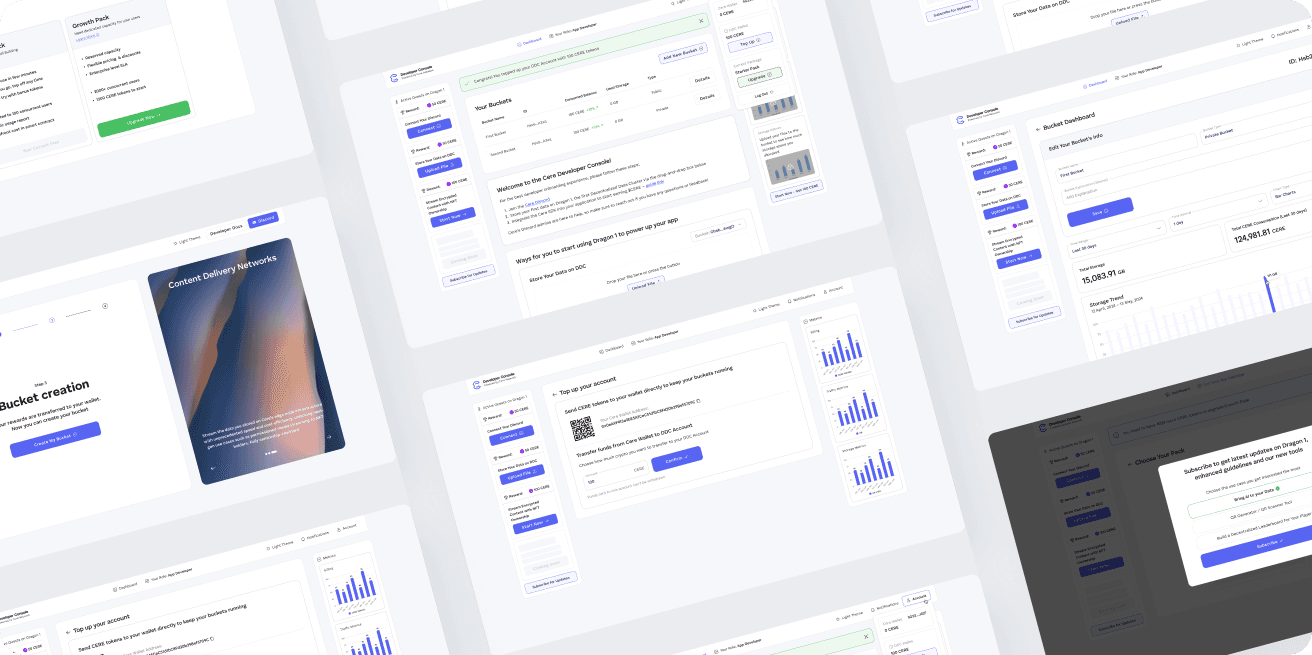
A Web3 developer platform that replaced raw CLI & documentation with a guided, visual interface for Cere Network's Decentralized Cloud.
Client
Cere Network
Type
Web3 Developer Tooling
Role
Product Designer
Tools
Figma, Notion
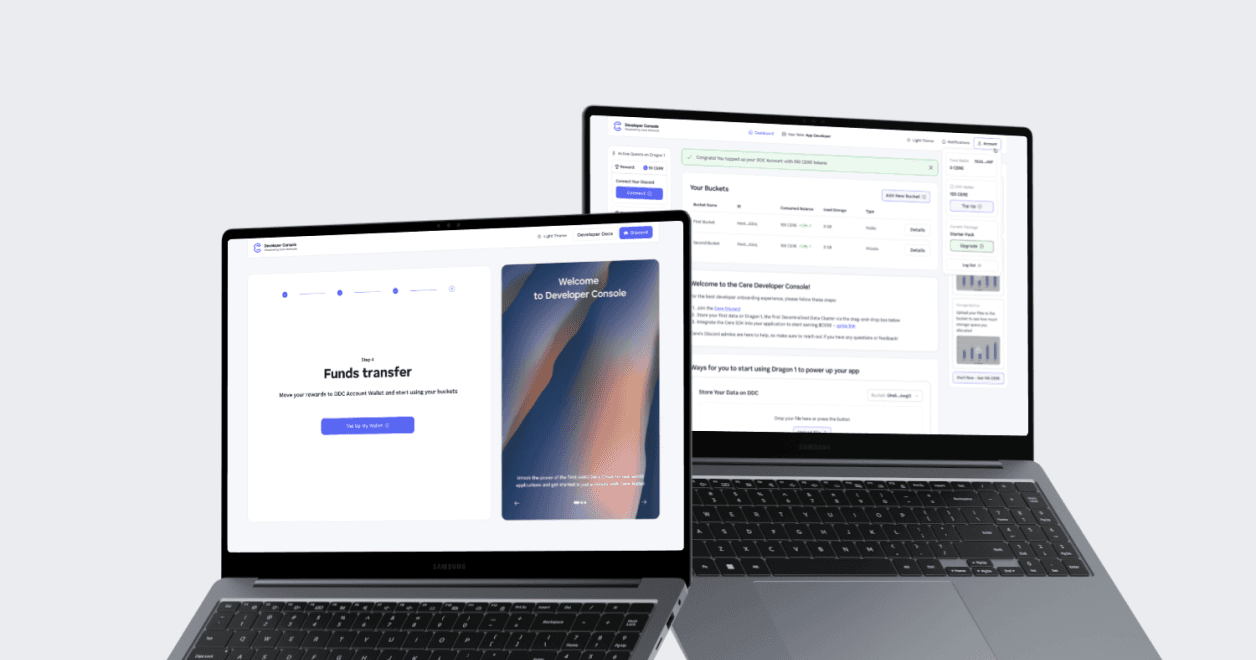
Overview
Cere Developer Console is a web application built for developers integrating their apps with Cere Network's decentralized Data Cloud — a blockchain-based infrastructure for storing and processing application data without centralized servers.
The Console gives developers full control over their cloud presence: setting up storage environments, creating data buckets, managing crypto-based billing, and monitoring how their apps perform on the network.
I designed the full UX/UI from scratch as part of the Cere Network team, working alongside engineers and product stakeholders.
The Problem
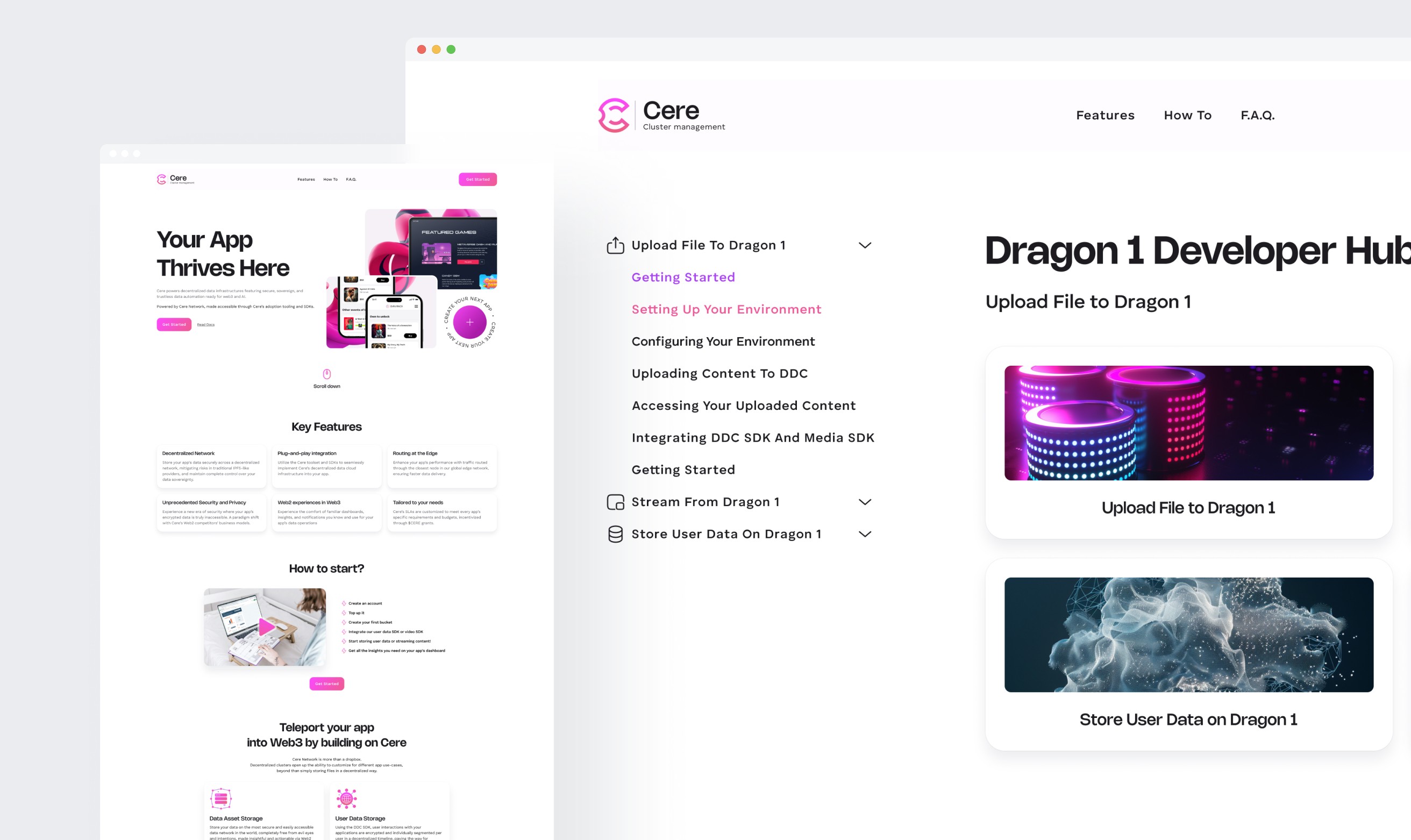
Before the Console existed, developers working with Cere's Data Cloud had no dedicated interface at all. Onboarding happened through raw documentation, CLI commands, and direct API calls.
There was no visual feedback, no guided setup, no way to monitor what was happening with your data in real time.
The experience was closer to reading a whitepaper than using a product. Drop-off during the first integration attempt was high — developers hit friction at wallet connection, got lost during environment configuration, and had no visibility into storage or billing once they were in.
The challenge was twofold: build a developer console that makes Web3 infrastructure feel as approachable as Web2 tooling like Vercel or Supabase, and create enough engagement to keep developers active on the platform after their first session.
Role & Process
I worked on this project as a Product Designer in close collaboration with a Lead Designer — contributing to the full design process from information architecture and user flows in Figma, through component design, to final UI. The project covered 20+ screens across 4 core flows: authentication, onboarding, storage management, and billing. The component library was built from scratch — 40+ reusable UI elements — ensuring consistency across the entire product.
Working within the Cere Network team, we collaborated closely with engineers to ensure the flows mapped to actual API capabilities and blockchain constraints. Every pattern had to be adapted or invented: wallet auth, token deposits, and decentralized storage have no direct equivalents in Web2 tooling, and standard UI conventions simply don't transfer.
Onboarding Flow
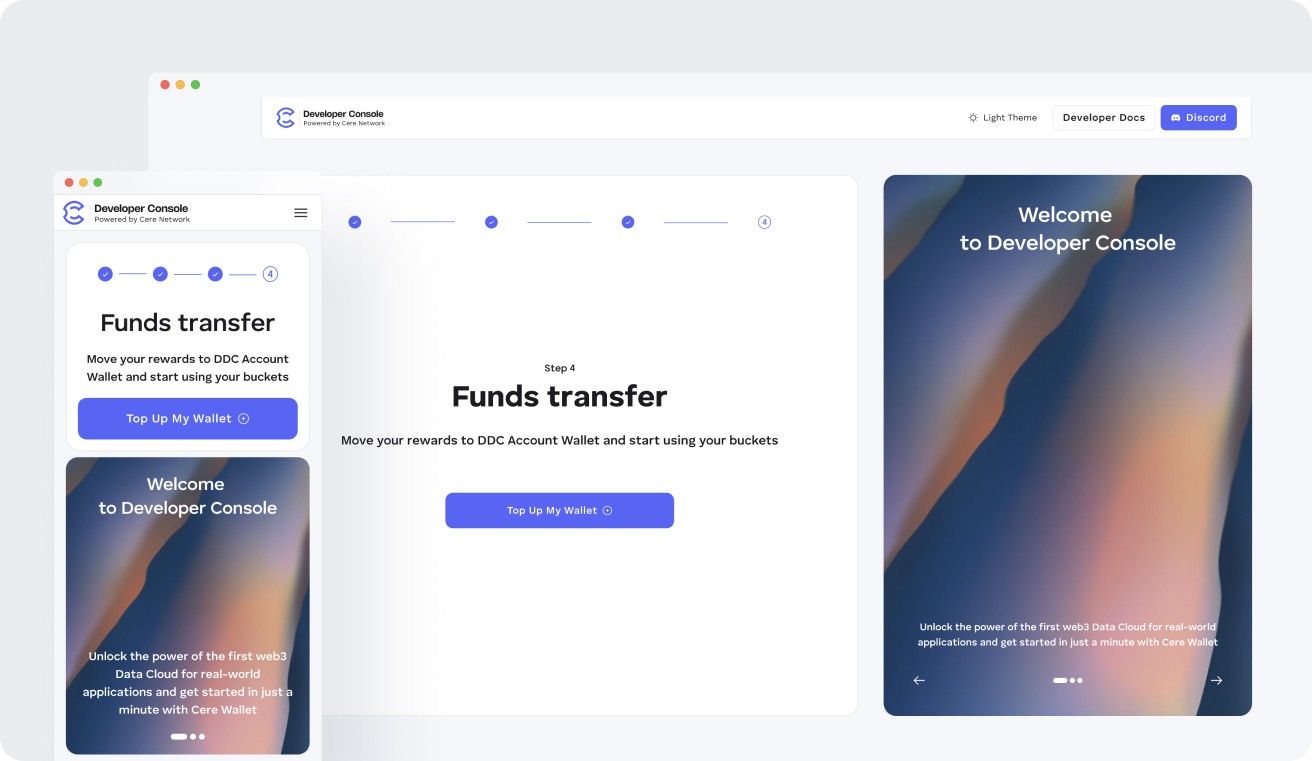
The onboarding was the most critical part of the experience — it had to take a developer from zero to their first deployed bucket in a way that felt logical and low-friction, even though the underlying steps were technically non-trivial.
I designed a sequential four-step flow:
Wallet Connection
The entry point to the platform. Instead of traditional auth, developers connect a crypto wallet (Polkadot-compatible). The UI had to demystify this for developers unfamiliar with Web3 patterns — clear state indicators, inline guidance, and explicit feedback at every step replaced what had previously been a raw CLI command.
Environment Preparation
Configuring the network environment before any data can flow. Before the Console, this step required manual configuration with no visual confirmation. The redesign introduced clear status indicators and contextual help, making the process transparent rather than a black box.
Bucket Creation
The core action: spinning up the first data container in the decentralized cloud. I designed this as a focused, step-by-step module — naming, configuration, confirmation — keeping cognitive load minimal. Previously this was done entirely through API calls with no interface layer.
Funding the Account
Depositing cryptocurrency to pay for storage. Financial transactions in crypto carry higher anxiety than standard payment flows. The design prioritized clarity: showing exactly what's happening, how much, and why — replacing what had been an undocumented manual step.

Dashboard & Gamified Quests
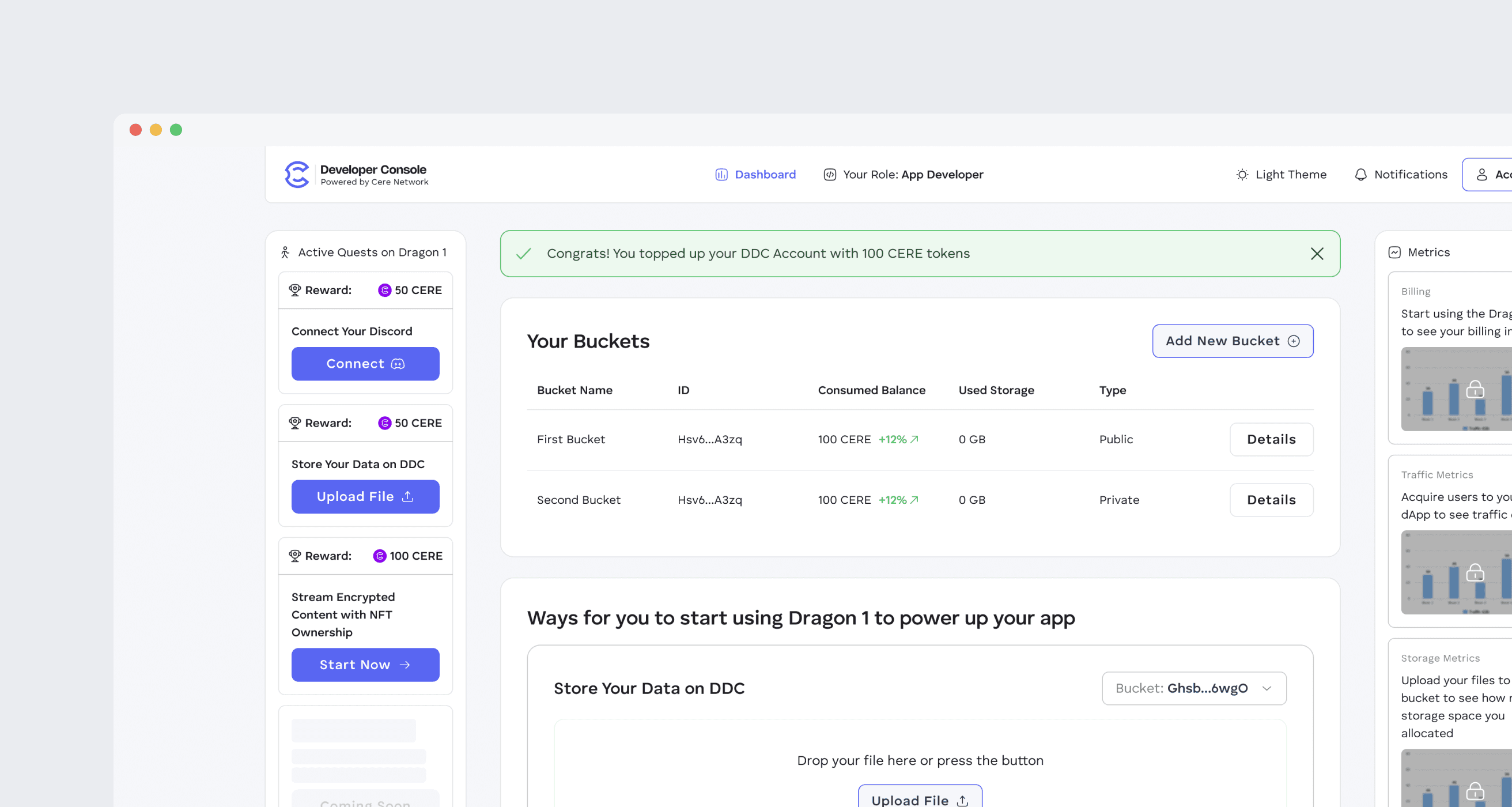
Once inside, developers land on a dashboard designed around two goals: visibility into their usage, and motivation to keep exploring the platform.
Quest System
The dashboard features a gamified onboarding layer built around Web3-native quests. Developers earn crypto rewards and NFTs for completing key milestone actions: connecting Discord, uploading their first data to the cloud, watching a stream on the platform, and other activation behaviors. This wasn't decoration — it was a retention mechanism that made the cold-start problem of a new developer console feel like a game rather than documentation. Quest completion drove 3× higher 7-day retention compared to developers who skipped the flow, and 60%+ of new users completed at least one quest within their first session.
Storage Monitoring
A real-time view of occupied space across the developer's buckets and applications. Data volume, usage trends, and capacity limits — all visible at a glance. Previously, checking storage required querying the blockchain directly.
Consumption Dashboard
Token flow tracking: how much cryptocurrency is being spent, at what rate, tied to which applications and environments. Consolidating storage monitoring and token consumption into a single view reduced navigation depth from 4 clicks to 1, and developers reported spending 30% less time locating billing information compared to the pre-Console workflow.
Outcome
The Developer Console shipped as the primary interface for developers onboarding to Cere's Data Cloud — replacing raw CLI and documentation with a guided, visual product experience. The gamified quest system provided an engagement layer uncommon in developer tooling, bridging the gap between technical infrastructure and a Web3-native audience that values token incentives as part of the product itself.
70%
onboarding
completion rate
3×
7-day retention for developers who completed the quest flow
30%
Less time spent locating billing and consumption data
20+
Screens designed across 4 core flows, built from scratch